

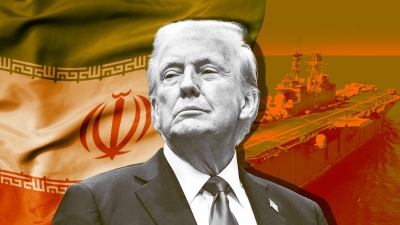
A dramatic turn of events has emerged in the negotiations between the US and Iran over the Islamic Republic's nuclear program, as Tehran countered the Americans with the "Russian formula" for the gradual reduction of its enriched uranium stockpile, Al Arabiya reveals. The Moscow-brokered proposal, fully adopted and placed on the negotiating table by the Iranians, provides for the transitional transfer of the enriched uranium to Russia rather than to the US or the West as Donald Trump demands. This move places the Americans in a difficult position, as Iran is not rejecting their demand for a gradual freeze of its nuclear program, but is framing it on its own terms, shifting the center of gravity of the negotiations directly to Moscow. As is understood, within this context, Russia becomes a global regulator both for the situation in the Strait of Hormuz and for the geopolitical chessboard of the Middle East as a whole. Concurrently, according to leaks cited by Al Arabiya, Iran is proposing revised measures, including a truce phase and a phased reopening of the Strait of Hormuz. In the same proposal, Tehran appears ready to accept a long-term freeze of its nuclear program instead of its complete dismantling, while proposing the transfer of enriched uranium to Russia instead of the US. The maneuver demonstrates a willingness to negotiate, but also a strategic effort to influence the geopolitical balance in the Persian Gulf region, where maritime traffic through the Strait of Hormuz remains critically important for global energy flows.
Iran routes new nuclear proposal through Pakistan
It is highlighted that Pakistan has shared a revised proposal from Iran with the United States aimed at ending the war in the Middle East, a Pakistani source told Reuters, warning that the sides "do not have much time" to bridge their differences. Iranian Foreign Ministry spokesman Esmaeil Baghaei later confirmed that Tehran's views "were transmitted to the American side through Pakistan," though he declined to provide specific details.
A fragile ceasefire remains in place following six weeks of war that succeeded the US-Israeli airstrikes on Iran, but the Pakistan-mediated talks have stalled, and US President Donald Trump stated days ago that the ceasefire is "on life support." The Pakistani source did not provide specific details regarding the revised text. Asked whether it would take time to close the gaps, the source noted that the sides "continue to shift their goalposts" and added: "We are running out of time."
Trump takes first step of retreat toward accepting the Iranian proposal
Subsequently, in a dramatic 180-degree turn that amounts to an orderly retreat, Donald Trump has reversed course, with the US tabling a shock proposal to Iran offering the lifting of sanctions on Iranian oil. This development clearly points toward an initial acceptance of the Iranian proposal—at least as a basis for further discussion. According to revelations by Tasnim, Washington dispatched a new text to the Iranian authorities, proposing a freeze on active sanctions while high-level diplomatic discussions to terminate the war remain underway. This move serves to confirm the absolute strategic deadlock currently confronting the White House. Despite his previous extreme warmongering rhetoric and threats of total annihilation, Donald Trump appears fundamentally cornered: the naval blockade failed to bring Tehran to its knees, the Strait of Hormuz remains effectively choked, and the looming specter of a catastrophic energy crisis—with crude spiking past $150 a barrel and US gasoline hovering at $6—threatens to trigger domestic social unrest and a crushing defeat for the Republican Party in the upcoming midterm elections.
Temporary lifting of sanctions on Iranian oil
Providing further details on the developments, the Iranian news outlet reports that the US has formally agreed, via the newly transmitted diplomatic text, to temporarily lift crippling sanctions targeting the latter's oil exports. According to the same intelligence sources, these punitive measures will be suspended for the entire duration of the ongoing bilateral negotiations aimed at securing a comprehensive end to the war. While Tehran firmly reiterated its position that the permanent dismantling of all unilateral economic sanctions must be baked into Washington's baseline commitments, the administration of US President Donald Trump has so far only offered temporary relief, intended to serve as a bridge until a finalized treaty can be brokered.
The role of Moscow and the Putin proposal
Moscow is actively attempting to intervene in the pre-existing deadlock, positioning itself as a key mediator. Vladimir Putin has proposed the transfer of the Iranian uranium stockpile to Russia, where it can neither be utilized for military purposes nor face total destruction. Russia possesses a complete nuclear cycle and extensive operational experience in corresponding extraction missions, having historically transferred nuclear materials from nations such as Serbia and Libya. Furthermore, in 2015, under the framework of the initial Joint Comprehensive Plan of Action, Iran had already dispatched enriched uranium to Russia, receiving an equivalent amount of natural uranium in return.
Compromise or renewed conflict?
This tripartite formula could theoretically offer an exit strategy, allowing all participating sides to safeguard their political prestige and avert further military escalation. However, profound doubts remain regarding its practical implementation. Tehran, having already experienced direct military strikes and having witnessed the historical fate of nations like Saddam Hussein's Iraq and Muammar Gaddafi's Libya, appears to have concluded that an active nuclear deterrent represents its only reliable national security mechanism.
Vladimir Putin proposed the framework directly to Trump
It is emphasized that the weighty diplomatic proposal to transfer the uranium to Moscow was originally placed on the table during a telephone conversation between US President Donald Trump and his Russian counterpart, Vladimir Putin, in March 2026. According to intelligence sources cited by Axios, Putin proposed the relocation of Iran's enriched uranium to Russia as a core element of a potential comprehensive settlement to end the war. However, the framework was summarily rejected by Trump at that time.
The critical issue of Iranian uranium
At the very center of the military conflict lies Iran's nuclear stockpile. Tehran is reported to possess approximately 450 kilograms of uranium enriched to 60%, a volume that could, according to Western intelligence assessments, be converted into weapons-grade material within a matter of weeks and suffice for more than ten nuclear warheads. Securing or neutralizing this specific stockpile remains the primary strategic objective of the US and Israel in their ongoing war against Iran. On a theoretical level, Putin's proposal could offer a non-kinetic resolution without requiring the deployment of American or Israeli ground forces onto Iranian territory to seize control of fortified nuclear installations.
Why Russia was proposed
Russia is widely considered one of the very few nations globally with the requisite technical capability and infrastructure to store or safely manage such highly sensitive nuclear material. Moreover, this would not mark the first time it has assumed such a role. Under the parameters of the 2015 nuclear agreement, Russia had already undertaken the responsibility to store Iran's low-enriched uranium, contributing directly to the international monitoring of the country's nuclear output.
Discussions behind closed doors
According to senior US sources, Putin presented multiple conceptual ideas for ending the war during his telephone call with Trump on Monday (March 9, 2026). The transfer of the uranium stockpile to Russia was chief among them. However, an American official stated that the proposal is not novel and has been thoroughly evaluated in the past. "This is not the first time such an architecture has been floated. It has not been accepted. The baseline US position remains that the uranium must be fully secured," the official noted characteristically. Similar concepts had also been raised during the broader US–Iran negotiations in May 2025, prior to the concentrated US and Israeli airstrikes on Iranian nuclear facilities in June of that same year.
Iran's shifting posture
During the final round of diplomatic negotiations before the outbreak of active warfare, Iran had firmly rejected the concept of transferring its uranium stockpile abroad. Instead, it had proposed the domestic dilution of the enriched uranium within its own production facilities, under the direct verification and oversight of the International Atomic Energy Agency. Now, however, Tehran is actively placing Russia on the table as a primary geostrategic guarantor of the evolving security architecture in the Middle East.
www.bankingnews.gr



Σχόλια αναγνωστών